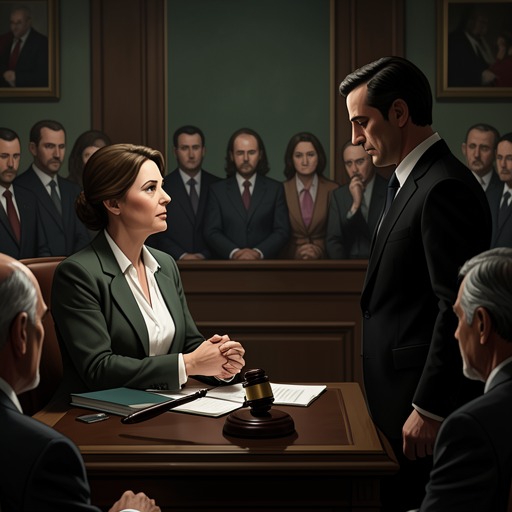
Millie and Kelsey’s Friendship, Broken After Millie Saves Her
The HousemaidMillie Calloway and Kelsey’s friendship is broken by the night Millie intervenes to stop Duncan from assaulting Kelsey. Millie understands her violence as protection, but Kelsey’s later rejection leaves the rescue with a consequence Millie cannot reconcile: the person she acted for does not remain her friend.
The assault and Millie’s intervention
At a boarding school for teenagers with disciplinary problems, Millie and Kelsey sneaked out to a party in the boys’ dormitory. Passing a bedroom, Millie heard Kelsey screaming for help. Inside the dark room, she found Duncan, a much larger classmate and football player, forcing himself on Kelsey. Millie could not pull him away by force, so she felt along a desk until she found a paperweight and struck him repeatedly. He died before reaching the hospital.
Years later, Millie recalls that she had been briefly paralyzed when she entered the room and saw Kelsey in danger. Her memory fixes on the paperweight and the moment Duncan became still: she considers the killing nearly worth the years she spent in prison, reasoning that he might otherwise have assaulted other girls. That conviction explains how Millie understands the act, but it does not tell her how Kelsey experienced what followed.
The friendship after the killing
Kelsey’s response turns the rescue into a lasting rupture. Millie recalls that the next time they met, Kelsey looked at her with disgust, and that Kelsey never spoke to her again. Millie cannot understand the rejection: she killed Duncan because he was forcing himself on her friend, and she believed her intervention had protected Kelsey. The two women therefore carry sharply different consequences from the same night—Millie remembers an act of defense, while Kelsey’s silence becomes the relationship’s final fact.
Millie’s later reflection sets that silence against a wider history of not being believed. When she tried to tell her mother that a teacher had threatened her, her mother dismissed the account and sent her to a disciplinary boarding school; after the killing, the school and her family turned away from her. This pattern helps explain why Kelsey’s rejection remains so difficult for Millie to understand, without establishing what Kelsey herself thought or why she withdrew. Their friendship ends not in a conversation or reconciliation, but in Millie’s unresolved conviction that she acted for Kelsey and Kelsey’s refusal to remain close to her.
The rupture within Millie’s later isolation
Kelsey’s silence remains part of a wider pattern in Millie’s life, but it does not explain or justify Kelsey’s response. After leaving prison, Millie describes confronting a bartender who repeatedly grabbed her; she punched him, and although he did not press charges, she lost the job. Soon afterward she was living in her car. The episode shows that Millie continued to answer unwanted advances with force, while the practical costs—lost work and housing—fell on her. It also clarifies the loneliness in her recollection of Kelsey: the friendship is not simply a painful memory of one night, but one of the relationships Millie cannot recover or rely on.
When Millie considers whether to contact Kelsey years later, she stops short, expecting no useful answer and recalling that Kelsey never spoke to her again. The possibility of renewed contact remains only a thought; the narrative offers no reconciliation, explanation from Kelsey, or account of what she wanted after the assault. Millie’s conclusion that she can trust only herself is therefore not a resolution between the two women. It marks the distance left by a friendship whose decisive act meant protection to Millie but did not restore their bond.
The legal aftermath
The intervention also became the event that shaped Millie’s adolescence: she was sixteen when arrested and in prison by seventeen. She eventually pleaded guilty to a lesser manslaughter charge, with Duncan’s family agreeing to the deal; they wanted vengeance for his death but did not want him publicly branded a rapist. Millie accepted the plea because a trial could have exposed other incidents from her past. The available account gives no explanation from Kelsey for the end of their friendship, but it shows the lasting personal and legal costs attached to the act Millie understood as protecting her friend.